The 5 Most Common Fuel-Wasting Mistakes in Fleet Management
The 5 Most Common Fuel-Wasting Mistakes in Fleet Management
(And How U.S. Trucking Fleets Can Fix Them Fast)
Fuel costs are the single most significant controllable expense in U.S. trucking.
For fleet owners and managers, diesel can account for up to 60% of total operating costs. That means every mile driven is a financial decision—and every inefficiency quietly erodes margins.
Most fleets focus on the obvious levers: driver behavior, preventive maintenance, and route optimization. All of these matter. But there’s a much bigger opportunity most fleets overlook entirely:
The diesel engine itself is fundamentally inefficient.
In fact, 60–70% of the energy you pay for in diesel fuel is lost as waste heat through the exhaust and cooling systems. That loss doesn’t just increase fuel spend—it also drives higher emissions, carbon buildup, and long-term engine wear.
Below are the five most common fuel-wasting mistakes in fleet management, with practical, proven fixes—including how hydrogen on-demand (HOD) systems are helping fleets attack inefficiency at its source.
Mistake #1: Ignoring Engine Thermal Inefficiency
The Silent Profit Killer Under the Hood
A conventional diesel engine converts only 30–40% of fuel energy into usable work. The rest is lost as heat, incomplete combustion, and unburned hydrocarbons.
Translated into dollars:
-
Spend $1,000 on diesel
-
$600–$700 never reaches the drivetrain
This inefficiency is built into the compression-ignition process. Incomplete combustion leads to:
-
Lost energy
-
Carbon deposits on injectors and valves
-
Higher NOx and particulate emissions
-
Reduced long-term efficiency
The Advanced Fix: Hydrogen Enrichment
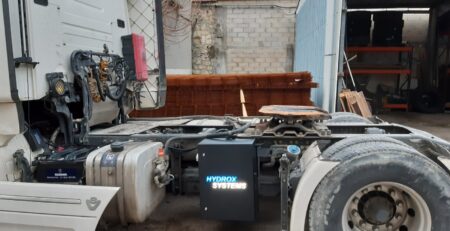
Hydrogen on-demand systems introduce small, controlled amounts of hydrogen gas into the intake air. The hydrogen is produced onboard from distilled water via electrolysis—no fuel storage, no refueling logistics.
Hydrogen doesn’t replace diesel. It enhances the combustion process.
Why it works:
-
Faster flame speed: Hydrogen burns up to 8× faster than diesel vapor, promoting more complete combustion
-
Combustion catalyst: Even tiny quantities improve diesel burn quality from ignition onward
-
Cleaner combustion: Fewer carbon deposits, cleaner injectors, and more stable combustion
Real-World Impact
Fleets using hydrogen on-demand systems consistently report:
-
10–20% fuel economy improvements
-
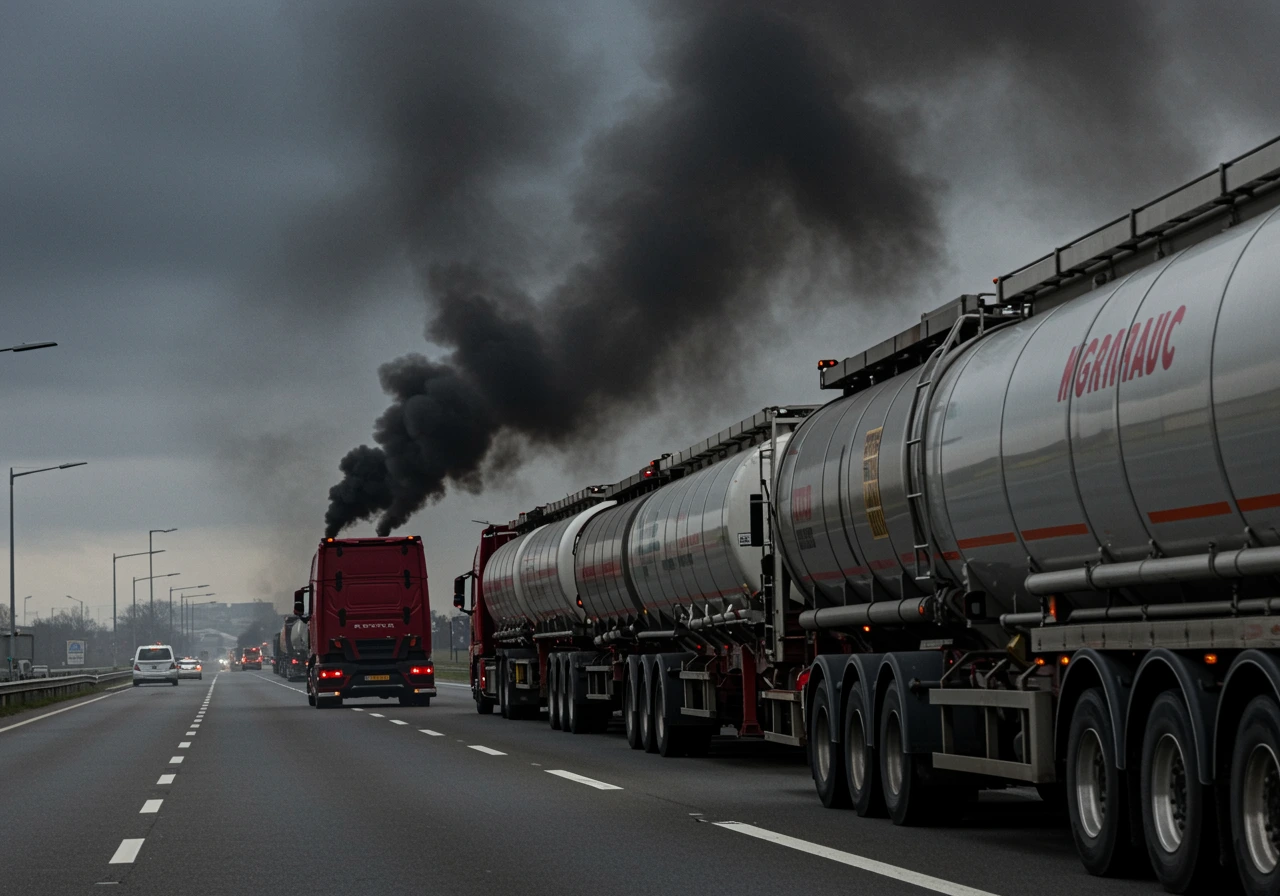
Lower visible smoke and particulate output
-
Cleaner engines over time
This isn’t marginal tuning—it’s fixing the core thermodynamic loss that dominates fuel waste.
Mistake #2: Underestimating the Human Factor
Driver Behavior Still Matters—A Lot
Even the most efficient engine can’t compensate for poor driving habits.
Common fuel-wasting behaviors include:
-
Excessive idling (up to 1 gallon per hour burned doing nothing)
-
Aggressive acceleration and braking
-
Sustained speeds above 65 mph
According to the U.S. Department of Energy, speeding alone can reduce highway fuel economy by 15–30%.
The Fix: Coaching + Technology
-
Deploy telematics-based driver coaching
-
Track idling time, RPM ranges, and harsh events
-
Use performance feedback, not punishment
Hydrogen enrichment complements this perfectly by improving low-RPM combustion efficiency, making good driving habits even more effective.
Mistake #3: Flying Blind Without Fuel Data
No Visibility = No Control
Many fleets still rely on averages and assumptions instead of real data.
The result:
-
Inefficient trucks go unnoticed
-
Fuel losses are blamed on routes instead of root causes
-
ROI on upgrades is hard to prove
Industry benchmarks show fleets without structured fuel analytics can overspend by 15% or more.
The Fix: Measure What Matters
Implement fleet management and fuel tracking tools that monitor:
-
MPG per vehicle
-
Fuel cost per mile
-
Idle time and duty cycles
This data is essential when evaluating hydrogen systems. It allows you to:
-
Establish a baseline
-
Verify before-and-after performance
-
Prove ROI in dollars—not theory
Mistake #4: Reactive Maintenance Instead of Preventive Strategy
Inefficiency Builds Quietly Over Time
Deferred maintenance forces engines to work harder and burn more fuel.
Common offenders:
-
Under-inflated tires (up to 3% MPG loss)
-
Clogged air filters (up to 10% MPG loss)
-
Worn injectors causing poor spray patterns
The Fix: Preventive Maintenance + Cleaner Combustion
A disciplined maintenance schedule is non-negotiable. Hydrogen-enhanced combustion adds a second layer of protection by:
-
Reducing carbon buildup
-
Keeping DPFs cleaner for longer
-
Lowering regeneration frequency and fuel penalties
-
Supporting longer oil and filter service intervals
Cleaner combustion equals more stable long-term efficiency.
Mistake #5: Fighting Physics with Poor Aerodynamics
Drag Is an Expensive Enemy
At highway speeds, aerodynamic drag is a major fuel consumer.
Fuel-wasting issues include:
-
Missing trailer side skirts
-
No roof fairings
-
Overpowered trucks on light-duty routes
The North American Council for Freight Efficiency (NACFE) reports that modern aerodynamic packages can deliver 10%+ fuel savings in line-haul operations.
The Fix: Stack Efficiency Gains
Aerodynamic upgrades reduce engine load. Hydrogen enrichment improves how efficiently that load is met.
Together, they create a compound fuel-saving effect that outperforms either solution alone.
From Identifying Waste to Calculating Real Savings
Knowing where fuel is wasted is step one. The real advantage comes from translating insight into fleet-specific financial outcomes.
The questions that matter:
-
What does a 10–20% fuel improvement mean for your fleet?
-
How fast does a hydrogen system pay for itself?
-
What happens to emissions and maintenance costs over time?
Every fleet is different—mileage, duty cycles, fuel prices, and equipment all matter.
That’s why we built a dedicated planning tool for fleet managers.
Calculate Your Fleet’s Hydrogen ROI—Free
Our Free ROI Plan Calculator lets you:
-
Input your fleet size and operating data
-
Model annual fuel savings
-
Estimate emission reductions
-
See a clear payback timeline for hydrogen on-demand systems
👉 Calculate your exact savings potential now
Stop losing 60–70% of your fuel energy to heat.
Start turning inefficiency into measurable profit.
Subscribe our Newsletter