Reducing greenhouse gas emissions from heavy-duty vehicles in Europe
Reducing Greenhouse Gas Emissions from Heavy-Duty Vehicles in Europe
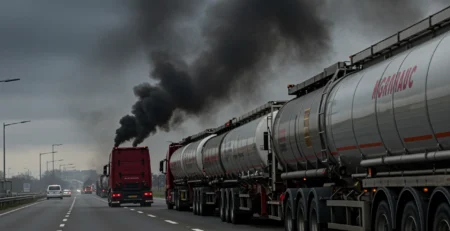
Heavy-duty vehicles (HDVs) account for around 25% of CO₂ emissions from EU road transport. Since 2014, these emissions have risen yearly, except in 2020, when COVID-19 temporarily reduced activity.
To reach the goal of a climate-neutral EU, the transport sector must change quickly. This includes boosting energy efficiency, switching to low-emission vehicles, and moving freight to more efficient transport modes.
🚚 Transport Sector and Greenhouse Gas Emissions
Despite improvements in vehicle efficiency, emissions from HDVs have increased. The reason? A sharp rise in freight transport demand, which outpaces energy efficiency gains.
To reverse this trend, the EU needs:
-
Cleaner vehicle and fuel technologies
-
Modal shift to rail and public transport
-
Stronger emissions performance standards
-
Better logistics and smarter transport planning
📈 Key Insights from the EEA
-
EU-wide GHG emissions have dropped over the last decade.
-
But HDV emissions continue to rise—driven by growing freight demand.
-
In 2020, emissions fell briefly due to the pandemic, not systemic change.
-
Trucks produce 85% of HDV emissions; buses and coaches account for the rest.
🚛 Energy Efficiency Isn’t Enough
Efficiency gains in vehicles and logistics help, but they’re not enough. The 25% increase in freight demand between 2000 and 2019 erased many of those benefits.
Trucks carried 31% more goods in 2019 than in 2000. Meanwhile, rail and waterways grew only 5%, shifting more freight to roads.
Even with 15% lower energy use per tonne-km, total emissions rose. Longer distances, higher loads, and more road-based freight explain the trend.
🔍 Breakdown of Emission Drivers (2000–2019)
According to a recent EEA report, key factors include:
-
Freight demand (main driver)
-
Increased truck modal share
-
Vehicle efficiency improvements
-
Carbon intensity of fuels
-
Biofuel adoption (with mixed results)
These findings show that demand control and a modal shift are critical—alongside tech upgrades.
🚆 Shift to Efficient Modes of Transport
Shifting from trucks to rail or inland waterway can cut freight emissions. For passengers, moving from cars to buses, coaches, or rail reduces per-kilometer emissions.
Public transport is more GHG-efficient than cars or planes.
Urban buses, if powered by electricity or hydrogen, can further cut emissions while increasing HDV use.
🏭 The Transport Sector’s Role in the EU Green Deal
Transport makes up nearly 25% of EU GHG emissions. To reach climate neutrality by 2050, the EU must cut transport emissions by 90%.
This means deep changes:
-
Smarter freight management
-
Incentivizing modal shifts
-
Investing in cleaner technologies
-
Building zero-emission infrastructure
Every part of the sector must contribute.
⚙️ Improving Truck Efficiency
Trucks drive long distances and burn large amounts of fuel. Improving aerodynamics, powertrains, and fuel efficiency can cut emissions significantly.
Businesses are already motivated—fuel is a big cost. Logistics improvements like better route planning and heavier load optimization also help reduce fuel use.
🌱 Biofuels and Their Limitations
Biofuels are considered carbon-neutral, but their real impact depends on the feedstock. Crops grown for biofuel can cause indirect land use change, which offsets the benefits.
So while biofuels play a role, they’re not a silver bullet.
🔋 EU Vehicle Emission Regulations
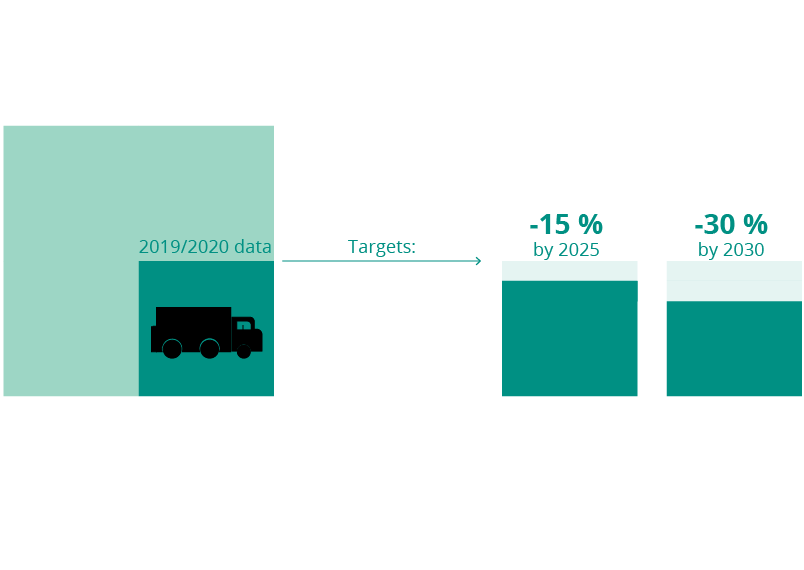
To curb emissions, the EU introduced CO₂ standards for new HDVs. Targets include:
-
15% reduction by 2025
-
30% reduction by 2030 (vs. 2019/2020 baseline)
These targets currently cover large trucks. The EU plans to extend them to:
-
Buses and coaches
-
Smaller trucks
-
Trailers
-
2035 and 2040 targets
Since 2020, the EEA tracks CO₂ data to measure progress.
🚧 National-Level Actions and Support
Member States are taking additional steps:
-
Electric road systems
-
CO₂-based truck tolling
-
Rail freight improvements
-
Zero-emission urban buses
Countries must also support battery-electric and hydrogen trucks with charging and refueling infrastructure.
🛣️ Demand Management and Future Strategy
Reducing emissions needs a blend of strategies:
-
Avoid: Cut trip lengths and numbers
-
Shift: Move to low-emission modes
-
Improve: Boost tech and fuel efficiency
This ASI framework (Avoid–Shift–Improve) offers a comprehensive path to decarbonize road transport.
✅ Conclusion: A Multi-Solution Path Forward
Road transport decarbonization needs:
-
Clean technology adoption
-
Smarter freight and logistics
-
Efficient, public transport alternatives
-
Strong EU policy backed by national actions
Each solution alone won’t be enough. But together, they can drive meaningful change toward a climate-neutral Europe.
🔗 Explore Solutions:
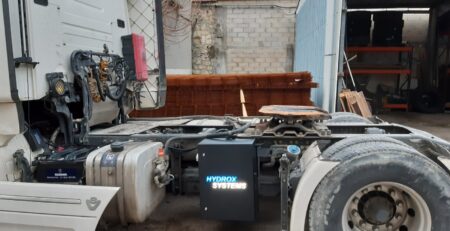
Advantages of Using a Hydrogen On-Demand System
Subscribe our Newsletter