HH+ Compound for Sale: Why the “Hydrogen Miracle” Isn’t Real
HH+ Compound for Sale: Why the “Hydrogen Miracle” Isn’t Real
The phrase “HH+ compound for sale” implies the existence of a proprietary chemical breakthrough capable of dramatically enhancing hydrogen production. This claim originates primarily from online video content that presents HH+ as a revolutionary additive for electrolysis.
A careful scientific review, however, reveals no evidence supporting the existence of HH+ as a real, commercially available compound.
This article evaluates the claim from a research-based perspective, explains what is actually being sold, and outlines how online audiences were led to believe HH+ represented a genuine innovation.
The Claim: A Hidden Electrochemical Breakthrough
Online creators promoting HH+ typically describe it as:
-
A rare chemical formula
-
A performance-enhancing electrolysis additive
-
A suppressed technological discovery
-
A solution capable of reducing energy consumption dramatically
These narratives often include suggestions that industrial or energy institutions are intentionally blocking the technology.
While compelling, such claims lack scientific validation.
Absence of Scientific Documentation
Authentic chemical discoveries normally generate:
-
Peer-reviewed academic publications
-
Patent registrations
-
Entries in chemical registries
-
Replication by independent laboratories
In the case of HH+, none of these indicators exist.
Searches across global patent databases, academic chemistry archives, and recognized compound registries return no record of HH+ as a novel electrochemical substance.
What Is Actually Being Sold as HH+
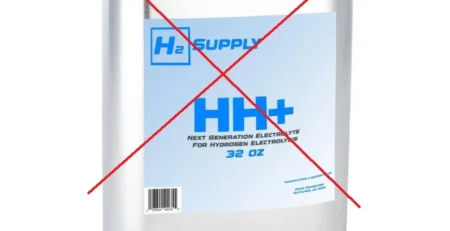
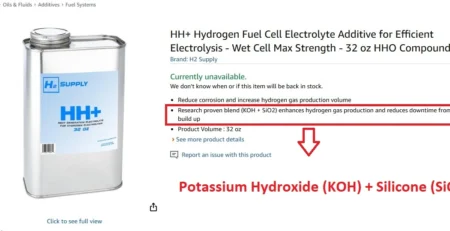
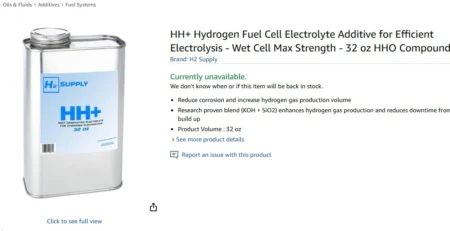
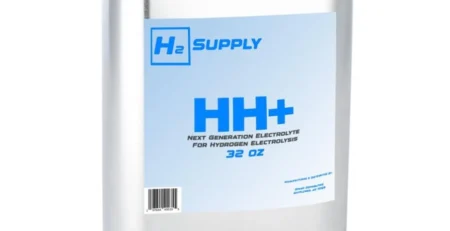
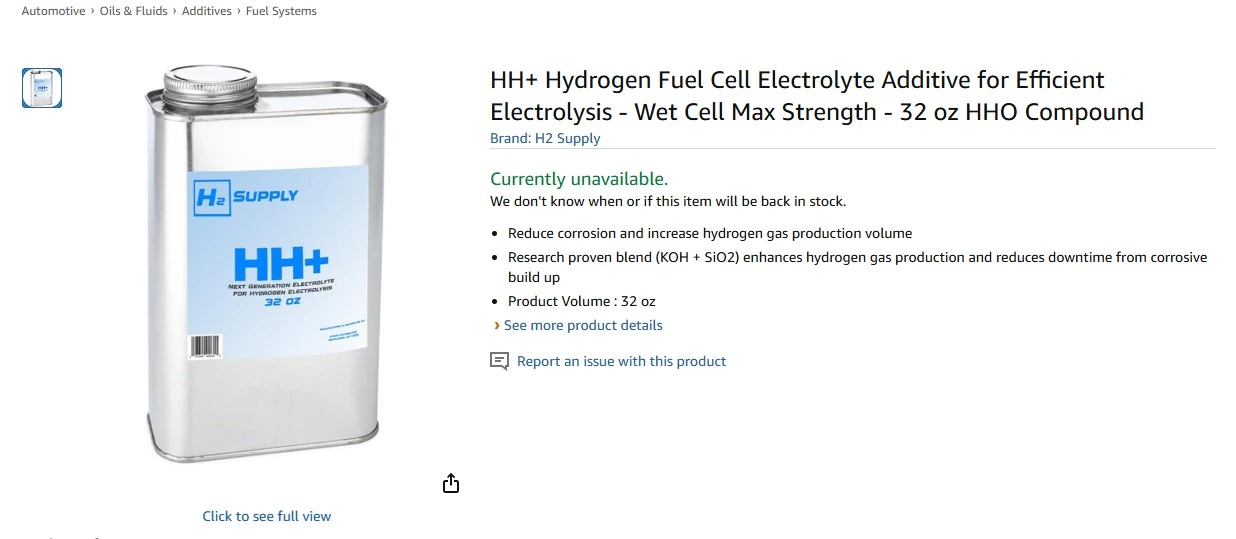
Products marketed under the HH+ label are, based on chemical expertise, most likely composed of standard electrolyte materials.
These may include potassium hydroxide, sodium hydroxide, or sodium bicarbonate — substances commonly used in electrochemical systems to improve conductivity.
Some formulations also appear to include anti-foaming silicone agents, which influence the visual appearance of reactions rather than altering their fundamental efficiency.
Thus, what is presented as a revolutionary compound is, in reality, a rebranded combination of inexpensive, widely known chemicals.
Why Viewers Believed It Was Revolutionary
From a cognitive and media perspective, the HH+ narrative benefited from:
-
Controlled and edited demonstrations
-
Lack of full experimental transparency
-
The framing of the technology as “forbidden” or “hidden”
-
The persuasive power of visual proof without independent verification
When viewers see apparent performance improvements without full context, it is natural to assume that a special substance must be responsible.
This demonstrates how presentation can shape belief more strongly than data.
Scientific Perspective on Electrolysis Efficiency
Modern electrolysis efficiency depends on factors such as:
-
Electrode composition
-
Electrical waveform control
-
Temperature optimization
-
Cell geometry
-
Electrolyte concentration
These parameters are well-documented in scientific literature and provide incremental, measurable improvements.
No credible research indicates that a simple powder additive can produce the dramatic efficiency gains claimed for HH+.
How Misinformation Spreads in Technical Topics
The HH+ phenomenon illustrates a broader pattern in online science communication:
-
Complex topics are simplified into dramatic stories
-
Ordinary chemistry is presented as hidden innovation
-
Viewers are encouraged to trust visuals over data
-
Mystery replaces measurable evidence
This does not necessarily reflect malicious intent — but it does show how engagement-driven content can unintentionally misinform audiences.
Conclusion: A Reminder to Trust Science Over Spectacle
There is currently no verified HH+ compound for sale. The materials being marketed under this name are almost certainly standard electrolytes presented as something extraordinary.
Viewers who believed in HH+ were responding to persuasive media — not acting irrationally. However, the experience serves as a valuable reminder:
Scientific breakthroughs leave evidence. Viral videos do not replace peer review.
When evaluating technical claims online, especially on YouTube, it is wise to remain curious — but also to rely on transparent research, independent verification, and scientific consensus rather than anonymous demonstrations.
Don’t be tricked :) Think before you believe what you see on YouTube!
Scientific References
-
Journal of Power Sources
-
Electrochimica Acta
-
American Chemical Society Publications
-
PubChem & CAS Chemical Registry
-
Electrochemical Society Reports
-
USPTO & European Patent Office Databases
Subscribe our Newsletter