
Oxy-Hydrogen vs Hydrogen: What’s the Real Difference?
🚀 What’s the Real Difference between Oxy-Hydrogen vs Hydrogen
Hydrogen is booming in the global energy conversation. But if you’ve heard about oxy-hydrogen (HHO gas) and pure hydrogen (H₂), you might wonder:
Aren’t they the same thing?
Not quite.
They differ in composition, storage, ignition, safety, and application. If you’re involved in transportation, industry, or sustainability, it’s crucial to know how each gas works — and which one fits your needs.
In this article, we’ll break down their technical specs, combustion speed, use cases, and how both support a greener economy.
⚗️ What Is Oxy-Hydrogen (HHO Gas)?
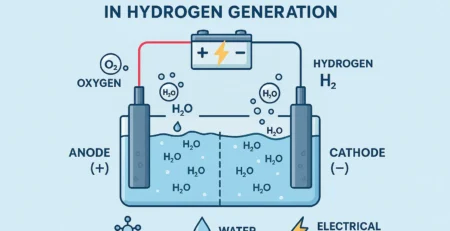
Oxy-hydrogen, also known as HHO gas, is a 2:1 mixture of hydrogen (H₂) and oxygen (O₂). It’s produced by electrolysis of water — a process that splits water molecules using electric current.
2H₂O → 2H₂ + O₂ → HHO
What makes HHO different is that both gases are used together. This gives the gas a very explosive, clean-burning profile — but it’s not stored. Instead, it’s produced on demand with a generator, typically installed in vehicles or machines.
🔬 What Is Pure Hydrogen?
Pure hydrogen refers to molecular hydrogen (H₂). It’s stored under high pressure (typically 350–700 bar) or cryogenic conditions (−253°C).
It can be:
-
Produced via electrolysis
-
Extracted from natural gas (steam methane reforming)
-
Captured from industrial processes
Pure hydrogen is used in:
-
Fuel cells (for electric vehicles and backup power)
-
Hydrogen combustion engines
-
Industrial heating
-
Chemical production
But it needs complex infrastructure and strict handling protocols.
🔍 Side-by-Side Comparison
| Feature | Oxy-Hydrogen (HHO) | Pure Hydrogen (H₂) |
|---|---|---|
| Composition | 2 parts H₂ + 1 part O₂ | 100% H₂ |
| Storage | On-demand only, no storage | Compressed or liquefied in tanks |
| Ignition Temp (in air) | ~280°C | ~560°C |
| Flame Speed | 280–325 cm/s (very high) | 265 cm/s |
| Flame Temp (in air) | ~2800°C | ~2045°C |
| Equipment cost | Affordable HHO kits | Expensive fuel cell or storage setup |
| Infrastructure required | Minimal (works with ICE engines) | High (fueling stations, tanks) |
| Main applications | Engine cleaning, fuel enhancement | Hydrogen fuel cell vehicles, industry |
| Safety risk (stored gas) | Low (no storage) | High (compressed gas hazards) |
| Green economy use | Efficient retrofit for decarbonization | Long-term green infrastructure goal |
⚙️ Technical Aspects: Flame Speed & Combustion
✅ Oxy-Hydrogen Flame Characteristics:
-
Burns almost instantaneously
-
High flame propagation speed
-
Extremely hot and clean flame
-
Adds no carbon to the system
-
Can be ignited with a spark at lower temps
This is ideal for internal combustion engines (ICE). It enhances the combustion of diesel or petrol, making it more efficient and cleaner.
✅ Pure Hydrogen Flame Characteristics:
-
Slightly slower flame speed, but still fast
-
Requires more precise air-fuel control
-
Burns clean, but flame is nearly invisible — making safety more complex
-
Best suited for fuel cell EVs or dedicated hydrogen engines
🔋 Energy Density Comparison
| Type | Energy per kg | Energy per liter |
|---|---|---|
| Pure Hydrogen | 120 MJ/kg | 10.1 MJ/l (at 700 bar) |
| HHO Gas | ~10 MJ/kg (mixed with oxygen) | Not compressed |
Pure hydrogen wins in mass-based energy density, but HHO wins in practical efficiency for enhancing combustion when used on-demand — especially for existing engines.
🧪 Chemical Behavior & Efficiency
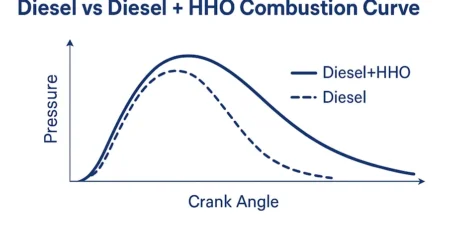
HHO’s real benefit is its synergistic effect. It doesn’t serve as a main fuel, but a combustion catalyst.
When injected into the air intake:
-
HHO lowers ignition delay
-
Enables more complete combustion of fossil fuel
-
Reduces emissions like CO, HC, and NOx
Pure hydrogen:
-
Works in hydrogen fuel cell EVs or burners
-
Requires complex fuel management
-
Ideal for applications where hydrogen is the primary energy source
Conclusion:
-
HHO is perfect for supplementing fuel use in engines
-
H₂ is best for replacing fossil fuels entirely
🛠️ Practical Use Cases
| Application | Best Fuel Type | Why? |
|---|---|---|
| Car or truck retrofits | HHO | Low cost, no engine modification |
| Public transit / bus fleets | HHO or H₂ | Depends on infrastructure |
| Stationary power systems | H₂ (fuel cells) | Continuous power, no emissions |
| Metal cutting / welding | HHO | Precision, high-temp, clean flame |
| Home generators / diesel gensets | HHO | Boost combustion, reduce soot |
| Long-haul hydrogen trucks | H₂ | Future-ready hydrogen infrastructure |
🌍 Environmental Impact: Green Economy Alignment
✅ Oxy-Hydrogen:
-
Produced using water + electricity
-
No storage = no risk of leakage
-
No CO₂ output from HHO itself
-
Enables cleaner burning of fossil fuels
-
Requires no changes to engine architecture
-
Ideal transition tech for transport & industry
✅ Pure Hydrogen:
-
Can be green when made from renewables
-
Essential for long-term decarbonization
-
No tailpipe emissions
-
Needs massive investment in infrastructure
🔐 Safety Considerations
| Safety Factor | HHO | H₂ |
|---|---|---|
| Storage risk | Low (gas is not stored) | High (compressed, flammable gas) |
| Explosion potential | Medium (if mismanaged) | High (leaks + ignition risk) |
| Use environment | Safe for mobile use | Safer in industrial/fixed settings |
| System complexity | Simple on-demand unit | Complex tanks + control systems |
HHO systems (like those from Hydrox Systems) are equipped with:
-
PWM current control
-
Overheat protection
-
Gas bubblers or flame arrestors
-
No high-pressure components
✅ When to Choose HHO vs Hydrogen
🔹 Choose HHO (Oxy-Hydrogen) if:
-
You want to reduce fuel costs and emissions now
-
You need a retrofit solution for diesel/petrol engines
-
You don’t want to store gas or build infrastructure
-
You want fast ROI (fleet efficiency, maintenance savings)
🔹 Choose Hydrogen (H₂) if:
-
You’re building a new energy system
-
You’re transitioning to fuel cell EVs (costly investments)
-
You have access to H₂ refueling stations or industrial hydrogen
-
You need zero-emissions at the point of use
📊 Summary Infographic (Suggested for Visual Version)
-
🔷 Oxy-Hydrogen
➤ Made from water on-demand
➤ 2:1 mix of H₂ and O₂
➤ No storage, low infrastructure
➤ Ideal for retrofits and fuel boosting -
🔷 Pure Hydrogen
➤ Requires high-pressure storage
➤ Used in fuel cells or H₂ engines
➤ Best for long-term decarbonization
➤ Needs full H₂ infrastructure
🏁 Final Thoughts
Oxy-hydrogen and pure hydrogen each have unique strengths. If you’re aiming for quick results, low upfront cost, and immediate emission reduction, HHO is your best ally.
If you’re building for the next 20 years and ready to invest in new fuel systems, hydrogen offers massive potential.
At Hydrox Systems, we specialize in real-world hydrogen applications — helping businesses bridge the gap between today’s engines and tomorrow’s clean energy.
Want to explore which hydrogen solution fits your fleet or business? Get in touch and we’ll help you plan your transition.
Subscribe our Newsletter